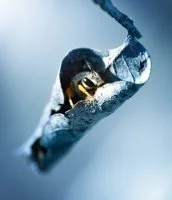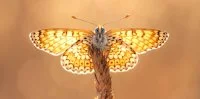
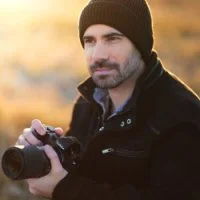
Clément Boyer is a passionate image enthusiast who first explored cinema before fully dedicating himself to photography. Fascinated by the microscopic world, he has specialized in animal macrophotography, capturing the unsuspected beauty of insects and spiders.
Can you introduce yourself and explain how you became a photographer ?
I am Clément Boyer, a 36-year-old from Montpellier passionate about images and, more recently, the world of the tiny. Before becoming a photographer, I was mostly interested in the seventh art. I studied cinema at the University of Montpellier and, once I graduated, I started my own business in the video field (clips, weddings, event recordings...). I have been focusing primarily on still photography for five years.
Indeed, I took advantage of the 2020 lockdown to further my training in photography. This is how I discovered animal macrophotography. The desire to reconnect with nature and take on a new challenge did the rest. Since then, insects and spiders have become part of my life. I try to learn more about them every day. It has become a true passion!
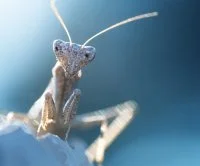
Macrophotography allows capturing incredible details of animals and flora. What particularly attracts you to this approach and how do you prepare to take such precise shots?
Macrophotography transforms the ordinary into the extraordinary. It's another way to discover our world. It often reveals surprising and fascinating details about creatures we don't even know.
It's also a very demanding activity. Finding a subject is not simple, and successfully photographing it is another story. You have to be at the right height, find an interesting composition, wait for the right light, manage to focus on a subject that is often tiny, and all this without scaring off the insect or spider you hope to photograph. Failure is part of the process. It can be frustrating, but that's precisely what makes this experience incredible.
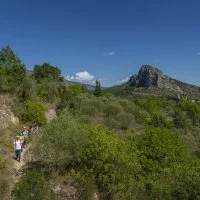
I love wandering around Pic Saint Loup without knowing what my next encounter or photo will be.
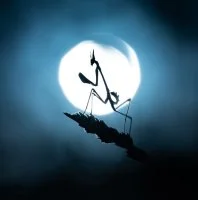
The Grand Pic Saint-Loup, with its rich biodiversity, seems to be an ideal place for your work. What special connection do you have with this area and how does it influence your photographic vision?
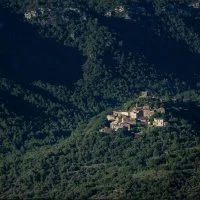
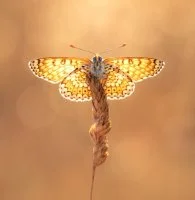
It's my favorite playground! Firstly, because I was born here and these landscapes have shaped most of my memories, but especially because it harbors incredible biodiversity! This was a fairly recent discovery for me. I roamed these landscapes for years without realizing the wonders that lived here. Amber-winged butterfly, mantis religiosa, lacewing magician, praying mantis, jumping spider... so many fascinating species!
Moreover, the Grand Pic Saint-Loup hosts several Natura 2000 sites aimed at preserving this biodiversity, so I am very happy to rediscover this area giving it all the attention it deserves. The territory of Grand Pic Saint-Loup is not just a backdrop; it is a true partner in creation. I try to pay tribute to it in each of my shots.
What message do you hope to convey through your photos? Are you looking to raise public awareness about the preservation of nature or to provoke particular reflections on our environment?
My main goal is to capture and share the beauty that surrounds us. By highlighting these small creatures, I hope to inspire curiosity and wonder in the public for these often-overlooked details. The world of the tiny needs it.
The more time passes, the more I try to give meaning to my work. I share my observations with INPN (the French National Inventory of Natural Heritage). This helps to give scientific value to my encounters.
Since last year, I have also been donating part of my earnings to OPIE (the Office for Insects and their Environment), an NGO that works for the knowledge and protection of insects in France. This seems to me an important approach.
My photographs are a declaration of love for nature and a call to protect it. Each photo is an invitation to slow down and observe, to discover the hidden beauty in every corner of our planet.