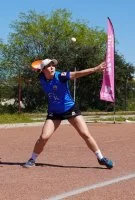
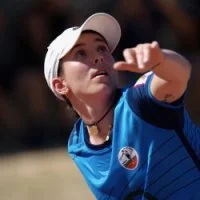
European champion, French international and passionate since childhood, Chloé Alignan shines a light on tambourin far beyond the fields. She talks about her journey, her attachment to the Grand Pic Saint-Loup, and her desire to make this emblematic sport of our region known.
To begin with, can you introduce yourself in a few words
Professionally, I am a physiotherapist, graduated from the Montpellier school for 2 years, I completed the first common year of health studies to access the Montpellier school. I currently work in a private practice in Castelnau-le-lez where I take care of a varied and rather active patient population. In parallel, I have been part of the medical staff of the MHR Women's Hope team (rugby) since 2025. I have always been committed to the sports and associative environment, from a young age with tambourin in my club (London Tambourin Club - board member), and for a few years now in rugby at the Pic Saint Loup rugby school.
You discovered tambourin at only 6 years old. What made you want to practice this sport and what kept you there all these years?
I started tambourin wanting to do like a friend from my school, I quickly got into it, I had the chance to participate in competitions and I liked it. From a very young age, I always wanted to compete with the boys and progress as much as possible, because I had the goal in mind, to do like the older ones and join the women's first team of the club, which I followed everywhere in all their matches.
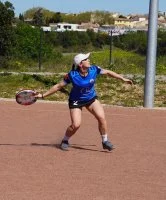
For those who are not yet familiar with tambourin, how would you explain this sport in a few sentences?
Tambourin is a racquet sport played 5 against 5 on a court 80 m long, separated in the middle by a simple line. The principle is the same as in tennis, to return the ball into the opposing camp, either in the air or by allowing it to bounce on the ground. A match is won in 1 set of 13 games (15-30-45: game). It is therefore a team sport requiring individual performance, primarily based on agility, precision, coordination, speed of movement, and endurance. Tambourin is a unique and spectacular sport that leaves no one indifferent when discovered. It impresses with the speed of the ball, but also with the elegance and precision of the gestures.
Tambourin is part of the identity of Grand Pic Saint-Loup and more broadly of Hérault. What does it mean to you to practice such a deeply rooted sport in our territory?
It is a pride to practice a traditional sport that is rooted in our territory and to be able to share my passion with as many people as possible. But it is also a frustration that our sport does not shine brighter and is not highlighted more.
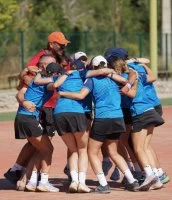
You regularly wear the colors of the French team and have won numerous titles, including a European champion title. What memory stands out the most in your career?
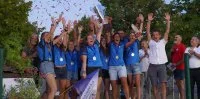
The best memory of my career is the year 2018, where we achieved the "grand slam" at only 16 years old, by winning the European Cup in Italy as well as the 3 French competitions: the Super Cup, the French Cup, and the French Championship.
A few months ago, the European Tambourin Cup took place. How did you experience this competition and what is your perspective on its importance for the development of this sport?
It was an immense joy to host the European Cup at home, at Notre Dame de Londres, which is THE competition anticipated every year, but also an enormous stress because we had to give 100% of ourselves for all the present people, the volunteers who worked tirelessly to organize the event, for our supporters, and to defend our colors and territory. The European Cup brings together the best French and Italian teams every year, making it the perfect showcase to promote and develop our sport.
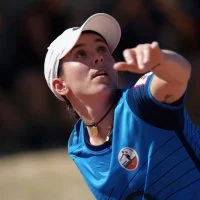
It is often said that tambourin is a spectacular sport but still little known. In your opinion, what surprises most people who discover it for the first time?
It impresses with the speed of the ball, but also with the elegance and precision of the gestures compared to the size of the court.
You are also very involved in the sports world as a physiotherapist and in rugby. Do these different experiences also nourish your way of practicing tambourin?
My experience and my involvement in another sport, such as rugby, have allowed me to develop an even stronger vision of the importance of teamwork and communication within a team. On an individual level, these experiences have allowed me to discover and develop other physical qualities, enabling me to advance the specific capabilities necessary to practice tambourin.
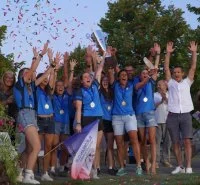
If you had to convince someone to try tambourin in just 30 seconds, what would you say?
I would say that tambourin is a sport accessible to everyone. It only takes a few balls to find your bearings and get a grip on tambourin. Very quickly, one can make exchanges, enjoy oneself, and share good moments regardless of one's level. It is a friendly, fun sport that makes you want to come back to the court.
What is the biggest cliché about tambourin that you would like to debunk?
"It's not about music" or "I am not part of an orchestra".
Outside of training and competitions, what quality has tambourin brought you in everyday life?
Tambourin has given me a lot, both personally and collectively. It has taught me to better manage my stress and emotions, especially in pressure situations. It is a sport that requires enormous work, rigor, and perseverance to master the technical gesture. On a human level, it has allowed me to develop essential values such as team spirit, communication, mutual aid, and solidarity.
What is your ritual before a match?
It is not really a ritual, but rather a gesture that allows me to switch into match mode and get into my bubble. I always play with a cap and have the same way of preparing: I do my ponytail, place my cap, adjust my little hairs, and then finish with my braid. Once the cap is on my head, I am ready, focused, and concentrated on my goal.

A slightly lighter question: if you could invite any athlete to try tambourin with you, who would you choose and why?
To stay in a racquet sport and local personality, I would say the Lebrun brothers, to see how their qualities as table tennis players could transfer to tambourin!
And as a rugby anecdote, I had the opportunity to let Fabien Galthié try tambourin.
Finally, what message would you like to send to the young people of Grand Pic Saint-Loup who are still hesitating to discover this sport?
I would tell the young people of Grand Pic Saint-Loup not to hesitate to come and discover tambourin. Very often, when we are young, we choose a sport because we saw it on television or because we want to be inspired by a personality we admire. However, there are also less publicized sports that can bring a lot, and tambourin needs new practitioners to continue to grow and make itself known.
It is a very rewarding sport, because with some advice and a bit of practice, one progresses quickly and enjoys being on the court. It also allows for the development of numerous physical qualities that complement other sports.
Young teams need new players to create competition and take on new challenges. The more young people who take the plunge, the more we can create attractive championships, with more competition, and continue to develop our sport.
So, why not be the one who will challenge their future opponents? By progressing, you can set increasingly ambitious goals, such as participating in major competitions like the Cup of Friendship, an international competition that brings together the best young players from France each year in the -14, -16, and -18 categories.