The Pic Saint-Loup in the Medieval Era
In Grand Pic Saint-Loup, the traces of the Middle Ages are numerous. From village to village or from churches to castles, traversing the small roads of Grand Pic Saint-Loup offers history enthusiasts as well as simple curious minds, a true journey through time.
Castles and fortified villages
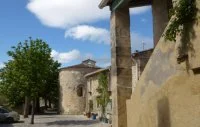
Nestled between hills, scrubland, and valleys, the territory of Grand Pic Saint-Loup is a true treasure trove of history where the imprint of the Middle Ages reveals itself at every step. Here, the medieval villages retain the charm of past centuries: cobbled streets, protective ramparts, stone houses, and Romanesque churches testify to a preserved heritage.
At the turn of the roads and paths, the majestic silhouettes of feudal castles remind us of the power of the former lordships, while the surrounding nature offers a grandiose backdrop, between vineyards, cliffs, and forests.
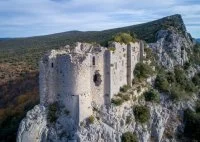
Medieval road trip
Embark on a journey through time, a unique medieval road trip in Pic Saint-Loup, where history meets you in every panorama.
Discover the perched fortresses, forgotten chapels, and classified villages that tell a thousand years of human adventure, faith, and conquests. Whether you are a history enthusiast, a hiking aficionado, or just curious, let yourself be seduced by cultural and authentic tourism in the heart of Hérault, in a territory where heritage, legends, and landscapes meet to offer an unforgettable experience.
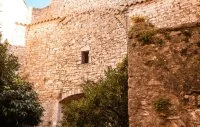
Traveling back in time in Grand Pic Saint-Loup
The Château de Baulx
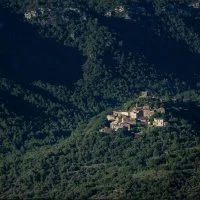
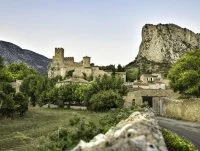
Overlooking the beautiful village of Saint-Jean-de-Buèges, the Château de Baulx is a fortress from the 11th and 12th centuries, renovated and enlarged in the 14th and 15th centuries.
In the 18th century, the château fell into disrepair and even served as a stone reserve, before being restored from 1990. Today, it is a gathering place for the village and its festivities.
The château offers guided tours in the summer and even storytelling walks. You will find exhibitions, conferences, and concerts.
Note: In February, the farmers' day of Saint-Jean-de-Buèges, dedicated to truffles, wines, and local products
The village streets
In the 13th century, les Matelles were considered the “capital” of the Republic of Montferrand thanks to the charters and franchises granted by the Bishop of Maguelone, Count of Melgueil (Mauguio) and Montferrand.
From this time, the village has preserved its cobbled streets, its stone houses with exterior stairs, and its vaulted passages that give it its timeless charm and invite wandering and strolling.
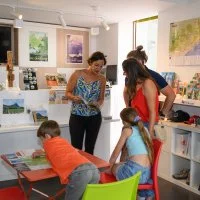
Don't miss : the Museum of Art and Archaeology, housed in the House of Consuls in the heart of the village.
The heart of the village
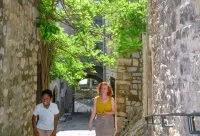
Strolling through the streets of the town of Viols-le-Fort, one navigates between past and present through the architectural testimonies of the Middle Ages and the craftsmanship of the many artisans of the village.
Shielded behind its medieval walls, which in the 15th century helped protect the inhabitants from danger, Viols-le-Fort offers a beautiful example of preserved heritage.
From Viols-le-Fort, you can embark on the Sentier des Drailles, leading to the eponymous dolmen: it is a hiking trail laid out on this ancient land of transhumance.
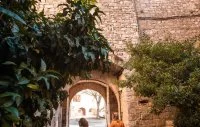
The Château de Viviourès
Formerly the property of the Count of Melgueil, the château served as a stronghold and residence, and changed names several times. The current name is believed to come from the Bevieures family who lived there in the 18th century. From the Occitan “bien viure,” it evokes a place where it is good to live.
Now closed to visitors, it remains a visual witness of the medieval past opposite the château of Montferrand, marking the entrance to a magnificent road that connects Saint-Mathieu-de-Tréviers to Saint-Martin-de-Londres, passing through the Fambetou pass.
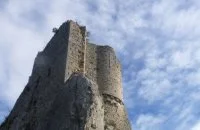
The church square
Did the English stay in the region?
It seems rather that the word “Londres” comes from the Occitan “loundras” which means “marsh.” The region was indeed marshy before the drainage works carried out well by the Benedictine monks and the construction of the fortified village of Saint-Martin-de-Londres.
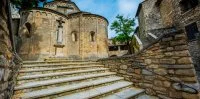
Today, the medieval heritage is harmoniously integrated into the village and shapes a true jewel case for its gem: the Romanesque Church of Saint-Martin.
To introduce Saint-Martin-de-Londres to the youngest, follow the clues of the mascot Leo, the ocellated lizard, through a discovery rally.
Information at the Tourist Office of Grand Pic Saint-Loup.
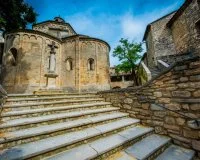
A charming little square
In the heart of the village of Guzargues, visit a small square lined with pretty facades: you will see a restored bread oven and the willingness of its inhabitants to beautify this area.
Don't miss the small Romanesque church, listed as a historic monument, flanked on two sides by the buildings of the former presbytery.