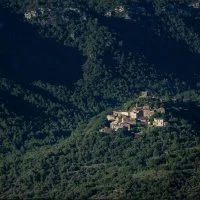
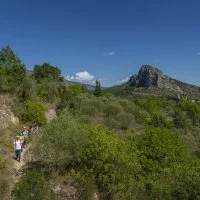
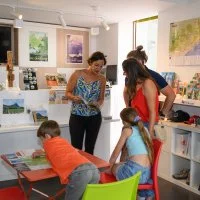
Between wooded hills and fragrant scrubland, this village charms with its peaceful atmosphere, rich ancient heritage, and vibrant cultural life.
Our favorites


The village tells its story…
The history of Murles is rooted far back in time.
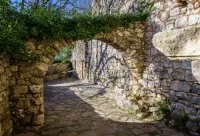
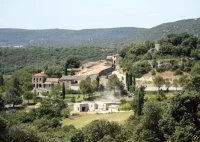
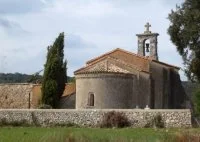
Prehistoric relics testify to human occupation as early as the Neolithic, when the first inhabitants set up their shelters in the midst of hills and springs. In the Middle Ages, the village organized itself around a fortified castle, built in the 11th century. A little away from the center, the Romanesque church of the Nativity of Saint John the Baptist reminds us, through its sobriety and its location near a spring, of the religious traditions of the past. These witnesses of the past compose a harmonious ensemble of stone, vegetation, and memory.
Don’t miss!
The ruins of the Montlaur castle: medieval remnants of a fortified castle from the 11th century.
The church of the Nativity of Saint John the Baptist: simple Romanesque building, isolated in the woods.
The dolmens and menhirs: including the Pierre du Banel and the Caisse des Morts, prehistoric witnesses.
A living terroir
Murles maintains a strong agricultural vocation, focused on viticulture, beekeeping, and extensive livestock farming.
The municipality is committed to preserving its environment: protected wooded areas, ZNIEFF, and local actions to maintain biodiversity. Here, the landscape is not just a backdrop but an essential component of the inhabitants' way of life.
Did you know?
Murles is among the few French municipalities that, until 2004, did not name their streets.
The village is also home to the Baronnie de Caravètes, a traditional brotherhood from Languedoc, which annually holds a colorful inauguration ceremony.
The people from here
The inhabitants of the municipality of Murles are called Murlois and Murloises.