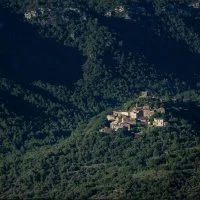

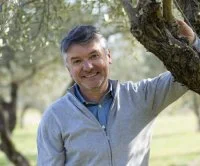
In 2008, Bruno Le Breton took over the Domaine de la Jasse where he had been working as a winemaker until then. A beautiful adventure and an enlightened perspective on the evolution of the wine world.
Taking over the Domaine de la Jasse, a nice challenge?
Of course! I suddenly became an entrepreneur. I had to borrow, which pushed me to plan for the long term. It then seemed obvious to find meaning in the story I wanted to write.
Did you then register in a CSR* approach?
This happened gradually. I realized that they were good management tools. This approach continuously questions us: what do our clients expect from us? Our collaborators? Society? Our territory? By reversing the proposal, we can more easily find answers, especially in the face of environmental issues.
* CSR: Corporate Social Responsibility.
What are these issues exactly?
Wine is not a natural product; it is a creation of man. Therefore, making wine necessarily has an impact. We are confronted with climate change, resource economy, biodiversity preservation, and pollution.
For each of these issues, our approach is to precisely quantify how we reduce our negative impacts and how we increase positive contributions on a territorial scale. We thus engage in a virtuous dynamic of quantified progress.
What are the advantages of the Grand Pic Saint-Loup?
There is an evidence that we often forget: the Mediterranean rim is a global hotspot of biodiversity. We have conducted inventories and discussed with recognized specialists… The reports are eloquent; when comparing to other wine regions, especially the most prestigious, we make others envious! We also benefit from maritime entrances that provide us with water, an essential resource for all agriculture.
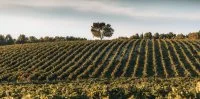
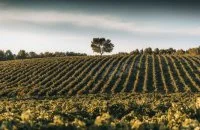
Finally, if we have this mosaic of vines in the middle of the garrigues, it’s because others before us broke stones! We owe our ancestors for structuring and maintaining our landscapes.
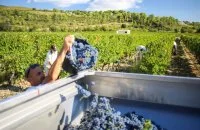
What is your philosophy in making your wines?
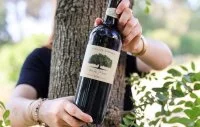
We like to make choices, create new things. For example, we work with merlot and cabernet**, while here syrah and grenaches** are traditionally more present.
But this choice pleases our clients because we found that these grape varieties, when properly ripened and well raised, provide pleasure both to a novice audience and to a more demanding audience that will appreciate the elegance of a more structured wine, with more aromatic complexities and a good aging capacity. This challenge pleases us immensely.
** merlot, cabernet, syrah, grenaches: these are different varieties of vine plants.