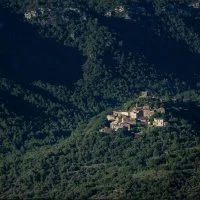
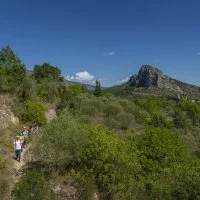
Nestled at the foot of the puech des Mourgues, the village combines rural authenticity, ancient heritage, and a panoramic view over the Hérault garrigue.
Our favorites


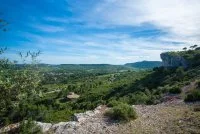
The village tells its story…
The site of Saint-Bauzille-de-Montmel provides traces of ancient occupation.
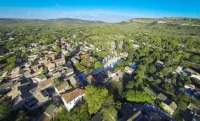
On the Puech des Mourgues stood an oppidum during the Iron Age, then during the Gallo-Roman period. In the 13th century, the Bishop of Maguelone established a convent for nuns there, receiving in income the church of Saint-Germain-de-Fournès, of which some walls remain today. The village itself is structured around the parish church dedicated to Saint-Bauzille, rebuilt in the 19th century to respond to a population increase.
Must-see!
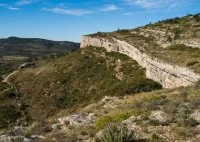
The Puech des Mourgues: classified Natura 2000 site, which can be explored on foot and offers a spectacular view of Pic Saint-Loup, the Cévennes, and the sea.
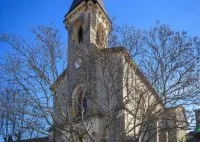
The church of Saint-Bauzille: whose Romanesque part (choir, pentagonal apse) is remarkable, and where one can still admire frescoes from the 18th century.
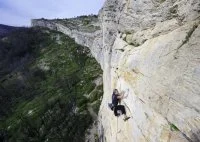
The climbing site of Puech: very popular with climbers, with over 200 routes of all levels exposed south-southeast.
A living terroir
On the sunlit slopes of the Puech des Mourgues, vines produce typical wines of Hérault, integrated into the Grès de Montpellier appellation.
The municipality belongs to a territory rich in biodiversity, with garrigue areas, forests, wind-battered limestone rocks, climbing sites and hiking trails that enliven the whole area.
Did you know?
The name « Bauzille » comes from one of the first Christian martyrs of Occitanie, Saint Baudille, from Orléans, who traveled to Nîmes and was beheaded around the year 300 for having interrupted a pagan sacrifice.
As for « Montmel », it refers to the ancient toponym Mormellicum or Mormolacus, mentioned in the 10th century as one of the vigueries of the pagus of Maguelone, indicating the administrative and historical antiquity of the place.
The people from here
The residents of the municipality of Saint-Bauzille-de-Montmel are called the Saint-Bauzillois and Saint-Bauzilloises.