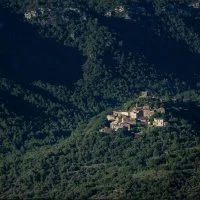
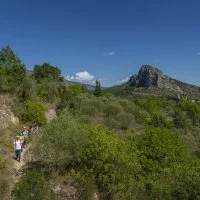
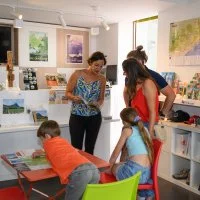
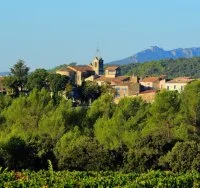
The village of Vacquières primarily lives from viticulture, with vineyards occupying most of the arable land of the eastern countryside near Montpellier.
Our Favorites


The village tells its story…
Vacquières is a village whose history is deeply rooted in rural and artisanal traditions.
Its name, derived from the Gallo-Roman gentilice Vatius, combined with the suffix -anum, means "domain of Vatius." Remnants from this era, such as a Roman villa and a necropolis, bear witness to this ancient occupation.
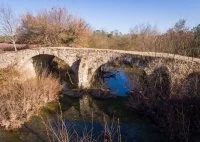
In the Middle Ages, the village is mentioned in official writings in the 12th century, particularly during the construction of the hospital of Sylve Gautier, located on the main road leading from Montpellier to Bruges (Belgium). This site, now privately owned, consisted of a church, a hospital, and a cemetery, and was located near the Cammaous bridge on the Brestalou, built a century earlier.
Don't miss out!
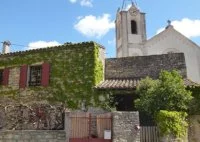
The Church of Saint-Étienne: Gothic building from the 13th century, characterized by a nave with three aisles and a semi-circular apse.
Château de Lascaux: Remains of a medieval castle erected in 1200, offering a panoramic view of the village and its surroundings.
The Roman Bridge of Cammaous: Built in the 11th century, this stone bridge spans the Brestalou and bears witness to medieval engineering.
The Hospital of Sylve Gautier: Ruins of a medieval hospital, located near the Cammaous bridge, offering a glimpse into the hospital history of the village.
A living terroir
The village is at the heart of the AOP Pic Saint-Loup, a terroir renowned for its rich and aromatic red wines, where Syrah, Grenache, and Mourvèdre fully express themselves.
Did you know?
Vacquières was once a glass production center. The village housed several glassworks, the oldest of which, founded in the 17th century, produced bottles and blown glass items. This artisanal activity contributed to the local economy and left a lasting imprint on the village's history.
The People Here
The inhabitants of the municipality of Vacquières are called the Vacquiérois and the Vacquiéroises.