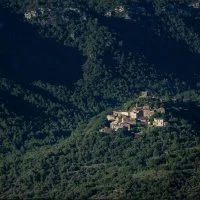
The community of Val de Montferrand
From the 13th century, the parishes and villages of the Montferrand valley grouped together under the authority of the bishop of Maguelone and the Castellan of Montferrand, to form the community of Val de Montferrand.
A Bit of History
In 1172, The House of Toulouse seized the counties of Melgueil and Montferrand. Then in 1209, during the Albigensian Crusade, Raymond VI of Toulouse, suspected of being complacent towards the Cathar heresy, donated 7 castles to the church to gain its favor.
The Castle of Montferrand is part of this and will be feudalized to the diocese of Maguelone. Raymond VI, not respecting his vassal duties, will have the entire county confiscated in 1211, then transferred in 1215 to the bishops of Maguelone, who will become counts of Melgueil and Montferrand until 1793.

At the end of the 13th century, village communities are progressively structuring themselves.
The bishop of Maguelone, who now holds the county authority, accompanies this change and rewards the inhabitants of the Montferrand valley who have remained particularly loyal to him. He grants certain parishes and villages privileges and benefits, detailed in three founding acts from 1276, 1285, and 1292.
In fact, these are social advances that mark the bishop's interest in ensuring that the people are not exploited by subordinate lords, by limiting certain burdens and ensuring better individual freedoms.

The Community of the Val de Montferrand
The "Community of the Val de Montferrand" was thus established during the first charter of 1276.
It then groups together 6 parishes (Valfaunès, Saint-Mathieu-de-Tréviers, Saint-Jean-de-Cuculles, Saint-Sébastien-de-Casanhas (Le Triadou), Saint-Gély-du-Fesc, Saint-Étienne (Cazevielle)) and 2 villages (Combaillaux and Saint-Clément-de-Rivière).
It will gradually extend to count about fifteen parishes and/or villages such as Les Matelles, Viols-le-Fort, Saint-Bauzille-de-Montmel, or even Vailhauquès grouped around the castle. It will establish its headquarters in Matelles, under the authority of the bishop, represented by the castellan and officer of the Castle of Montferrand, and will organize itself into elected syndics, representing each parish or village.

In the 15th century, while the kingdom is still ravaged by the hundred years war, the church gradually loses its influence and the county of Montferrand moves closer to the kingdom of France. The inhabitants of the Val de Montferrand then enter into direct contact with royal power to obtain permission to fortify their villages.
In 1459, they obtain the right to sit in the General States of Languedoc, confirming the strength of their agreement. They will demonstrate a true community consciousness. In their legal acts, sales of property, wills, criminal convictions, they specify their belonging and their involvement within the community of villages.
The institution of this grouping of interests through clearly identified acts will define a political unit, a necessary representation to weigh against larger cities like Montpellier, Ganges, or Lunel. The Castle of Montferrand, standing high on its rocky spur, still reminds us today of the epics of this community and territorial agreement.