The fortified villages
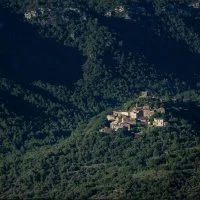
In the 15th century, the Hundred Years' War created a lasting climate of insecurity. In response to the concerns of the inhabitants, the villages began to fortify themselves. A new community identity began to emerge, centered around the Château de Montferrand.
A new identity
In the diocese of Maguelone, at the beginning of the 13th century, the majority of the fiefs and lordships (such as Montpellier, Ganges, Brissac for the most important ones) are under the episcopal and/or count's suzerainty of Melgueil-Montferrand. The county is divided into two administrative poles with to the south the Château de Melgueil (now Mauguio) and to the north the château de Montferrand (near the geographical area of the current intercommunal community).
Situated between an attractive coastline and the Cévennes, the Grand Pic Saint-Loup is an agricultural world, at the crossroads of trade routes between the Montpellier coast and the inland areas. Its rather scattered habitat is organized around the manses*, castra* and churches of the different parishes.
(*) : manses : ancestors of the mas / castra : plural of castrum : a place of aristocratic and peasant habitation in the Middle Ages, enclosed and fortified


The community of Val de Montferrand
From the 13th century, the parishes and villages of the Montferrand valley grouped together under the authority of the bishop of Maguelone and the...
The formation of villages in proper terms is thus going to be late. During the Hundred Years' War, when fighting does not rage, bands of idle mercenaries roam the region, in search of exactions and pillaging. This lasting insecurity will push the inhabitants to claim the construction of fortified enclosures to protect themselves, which the royal power will accept. Gradually, the grouping of inhabitants in and around these enclosures will contribute to the development and autonomy of these fortified villages, which still structure the territory today.
All around the Château de Montferrand, rediscover this medieval past, identifiable at the turn of the alleys, the details of architecture, the churches, or the fortifications.


Viols-le-Fort
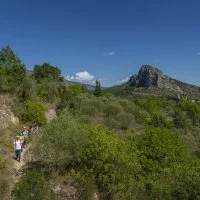
Viols-le-Fort has retained from its 15th-century enclosure an imposing gate-tower, recently listed as a Historic Monument. Its 12th-century church will be enlarged in the 19th century to accommodate its growing population. At the turn of its alleys, discover the shops of its craftsmen. For hiking enthusiasts, the trail of drailles, a lovely stroll on an ancient transhumance land, will lead you to the dolmen of the same name.
Saint-Martin-de-Londres
The village forms as early as the 12th century around a priory depending on the abbey of Gellone (Saint-Guilhem-le-Désert). Built by the monks in its fortified enclosure, the church is a treasure of Romanesque architecture in the region. The streets of the village are a haven of peace to combine strolls and historical discovery.


Notre-Dame-de-Londres
In the 15th century, the hamlet is fortified. The castle communicates with the Romanesque church with a double apse by an interior passage. It was remodeled in the 16th century around its square medieval keep which still dominates the central square. A charming village at the crossroads of picturesque roads, for a soothing stop.
Saint-Jean-de-Cuculles
The current church and its cloistered enclosure testify to the former priory of Cuculles that depended on the cathedral of Maguelone. It dates from the 12th century for the lower part and was heightened in the 14th century to be fortified and serve as a refuge for the population. Today it is a superb place, in the midst of vineyards, the starting point of a very beautiful road that will lead you to Cazevielle at the foot of Pic Saint-Loup.


Les Matelles
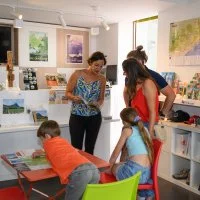
The village was the seat of the community of Val de Montferrand. Today its alleys, so characteristic of a medieval history, are a delight. Don’t miss the Maison des Consuls, which houses the Museum of Arts and Archaeology; a lively dialogue between archaeology and contemporary art, a testament to man’s know-how and his ability to transform his environment.