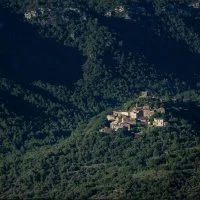
At the heart of the Grand Pic Saint-Loup, Notre-Dame of London is a quiet village where medieval history blends with the dry landscapes of garrigue and wet meadows. People come here for the stone, the panoramas, but also for the rhythm of a village where local life and ancient customs endure.
Our favorites


The village tells its story…
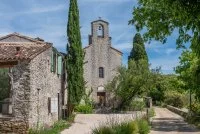
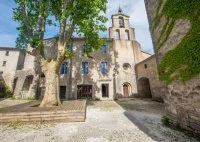
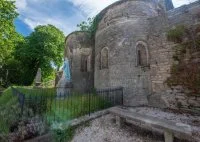
The village of Notre-Dame-de-Londres was formed around a medieval castle, owned by the Roquefeuil family in the 16th century, and a Romanesque church with two aisles dating back to the 11th-12th centuries.
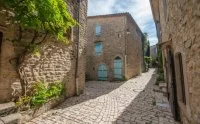
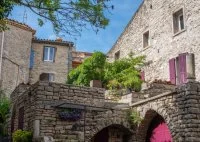
Once located in a damp valley, from which its name derives from ancient terms meaning "mud". The town developed on land that is now dried out. The ramparts and the shaded square recall this fortified past, while the castle, still visible, continues to overlook the landscape.
Not to be missed!
The castle of Notre-Dame-de-Londres: built in the 16th century by the Roquefeuil family, featuring elements of medieval military architecture (donjon, towers, walkway).
The Church of the Nativity of Notre-Dame: Romanesque church from the 11th-12th centuries with two aisles, flanked by a statue of the Virgin with a blue cloak.
The Ravine of the Arcs: a small canyon carved into the limestone scrubland, with giant pots in the rocks and pools of water depending on the times of year.
Tambourin matches: a local sport rooted in tradition, often played in summer, when the village showcases all its vibrancy.

Did you know?
The tambourin, a traditional sport from Languedoc practiced since the 19th century, is played with a ball struck with a tambourin, without a net. Deeply embedded in Occitan culture, it continues to be played in local clubs and during competitions, perpetuating a regional sporting and cultural tradition.

A vibrant terroir
Notre-Dame-de-Londres showcases a harmony between heritage and nature. The dry soils of the scrubland alternate with areas of wet meadows, making the village an ecological transition space. Agriculture, although not intensive, remains an important element: viticulture coexists with livestock farming, and local practices strive to respect biodiversity.
The locals
The inhabitants of the municipality of Notre-Dame-de-Londres are called Nodamélois and Nodaméloises.