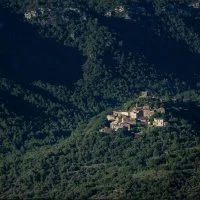
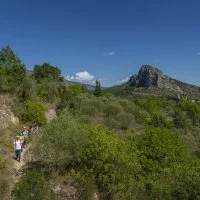
Perched on a hill in the heart of the scrublands and vineyards, Valflaunès offers an exceptional view of Pic Saint-Loup and the Hortus mountain.
Our favorites


The village tells its story…
The village first appeared at the beginning of the 10th century.
Its name in Occitan evokes “val figulin” or “potter's workshop,” suggesting an ancient artisanal occupation. During the Middle Ages, the strategic site of the Castle of Viviourès, in ruins but still visible nearby, dominates the valley: mentioned as early as the 11th century under the name “Castrum Rocheta,” it bears witness to the defensive importance of the place.
Over the centuries, Valflaunès has managed to preserve its tranquility while being part of the Montpellier attraction area.

Not to be missed!
Saint-Pierre Church of Valflaunès: Roman building from the 11th-12th centuries, very visible in the village.
The Castle of Viviourès: ruins perched on a rocky spur of the cliffs of Hortus. Today part of private property.
The views of the garrigue and vineyards: the hills and vines around the village invite hiking, mountain biking, or climbing.


A lively terroir
Valflaunès lives to the rhythm of viticulture, on sunny hillsides with limestone-clay soils that enhance the quality of the grapes. The village is part of the renowned wine area of Pic Saint-Loup, and several estates exploit this terroir to produce wines with distinctive characteristics.
Did you know?
Valflaunès is nestled at the crossroads of two limestone giants: Pic Saint-Loup and Hortus. In the past, the Hortus cliff housed Neanderthal camps—evidence of human occupation more than 30,000 years old has been found nearby.

The people here
The inhabitants of the municipality of Valflaunès call themselves the Valflaunésiens and the Valflaunésiennes.